

Can Trauma Affect You If You Don't Remember It? What Bessel van der Kolk's Work Can Teach Us
“His bestselling book The Body Keeps the Score brought the relationship between trauma, memory, the brain and the body into mainstream conversation. Van der Kolk's work explores how traumatic experiences can affect the way we remember, interpret and respond to what is happening around us, sometimes long after the original experience has passed.”
Why Do I Overreact to Small Things? When Your Reaction Feels Bigger Than the Situation
Our responses aren't created entirely in the present moment.
We bring our previous experiences, relationships, expectations and learned patterns with us.
So something happening today can sometimes touch something much older….
Why Do I Feel Unsafe When Nothing Is Wrong?
You know you're safe.
Nothing bad is happening.
Yet your body doesn't seem to believe it.
Perhaps you find yourself constantly scanning for danger, struggling to relax, or waiting for something to go wrong. You might feel tense, overwhelmed or unable to fully switch off, even when everything around you seems okay.
If this sounds familiar, you're not imagining it, and you're certainly not alone.

Why Feeling Calm Isn't Actually the Goal
If you've been living with anxiety, trauma or chronic stress, you may believe that healing means feeling calm all the time.
I know I did.
For years, whenever my heart started beating faster, my mind immediately assumed something was wrong.
"I'm getting anxious."
"I'm about to panic."
"I need to calm down."
Looking back, I can see I had become afraid of my own nervous system.
Why Am I Always Preparing for the Worst?
Do you always find yourself preparing for the worst? It isn't because you're negative—it's often a nervous system response to trauma. Discover why this happens and how healing can help you finally feel safe again.
Healing Yourself Doesn't Mean Healing Alone
A client asked me a question recently that has stayed with me.
"Can I heal myself?"
It's one of the most important questions I've ever been asked.
Because hidden inside it is another question.
"Am I capable of changing?"
My answer was simple.
Yes.
But healing isn't something someone else does to you.
And it's not something you have to carry completely on your own.
Do You Understand Your Trauma But Still Feel Like You're Living It?
Many people understand their trauma, know their triggers, and have spent years in therapy, yet still feel stuck in old patterns. Discover why insight alone doesn't always create change and how nervous system regulation and body-based approaches can support deeper healing.
What Makes Something ‘Traumatic’?
Trauma is not only about what happened to us — it is about how the nervous system experienced it. In this article, we explore what trauma really is, how it affects the body and brain, why you may still feel stuck in survival mode, and how somatic and nervous system approaches can support healing and resilience.
5 Signs Your Nervous System May Be Stuck In Survival Mode
Understanding the signs of a nervous system stuck in survival mode. Learn how trauma affects the body and why somatic, body-based approaches can support healing and regulation.
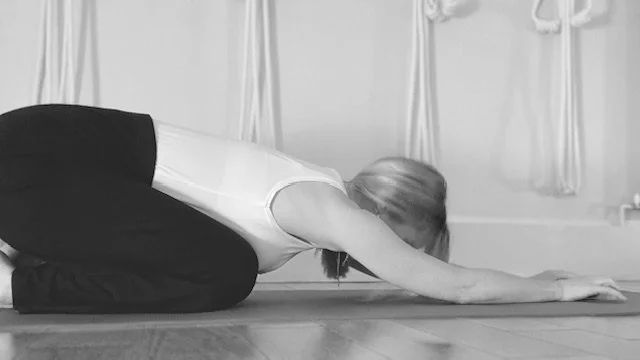
The Power of Mindfulness for PTSD and Extreme Stress
Yoga teacher in Child’s Pose practising gentle mindfulness to support nervous system regulation and recovery from PTSD and chronic stress.
Uncovering the Connection: Bessel Van Der Kolk’s Perspective on Yoga and Trauma
Trauma can leave lasting marks on both our minds and bodies. This often leads to complex reactions that can interfere with the healing process. Among various methods to address trauma, yoga has surfaced as a strong complementary practice as more scientific research has been conducted.
The Neuroscience of Trauma: How Your Brain Changes and How to Heal
Explore how trauma reshapes the brain and nervous system, how neuroplasticity allows healing, and how Havening and everyday practices can help you rewire your brain for safety, calm, and resilience.